


Best fractional laser skin treatment
With Fractional Laser, a laser beam is projected and split into several micro-beams that penetrate the skin and can reach the first or second layer of the skin (epidermis and dermis). Any light wave can be delivered to the skin fractionally in the form of light beams. This means that deeper penetrating ablative lasers, such as CO2 lasers, or minimally invasive lasers, such as the non-ablative Gaas laser, can be fractional lasers.
To better understand the differences between the two types of lasers, we need to detail a few elements of skin structure. The skin has 3 layers. The top one is called the epidermis and at this level are pigment-producing cells called melanocytes, which are responsible for skin colouring. The middle layer is called the dermis and is composed of collagen and elastin fibres responsible for the firmness, elasticity and tone of the skin. The basal layer is called the hypodermis and in this layer we find fat cells called adipocytes.
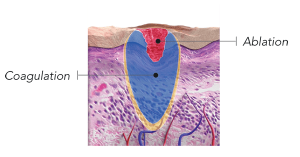
Ablative lasers such as CO2 lasers with a wavelength of 10,600 nm. act deeply, destroy the epidermis and reach the dermis, which they heat up. So the epidermal cells that colour the skin, the melanocytes, are vaporised and the heat beam reaches the dermis, where it stimulates collagen secretion and skin regeneration.
Ablative lasers are excellent for treating visible signs of ageing, and results generally last between 1 and 5 years. They can also be used to treat acne scars and pigmentation.
It is important to note, however, that ablative lasers require a longer recovery period and a higher degree of risk than non-ablative lasers. Most patients require between 1 and 2 weeks of rest. Some risks associated with ablative lasers include reddening of the treatment surface, skin discoloration, itching or even acne.
Non-ablative lasers such as GaAs only heat the skin without destroying any layers, but manage to induce a controlled healing response, which in turn stimulates collagen secretion from the inside out.
These lasers can treat sunburn, acne scars, fine wrinkles, or hypergmentation. Being a minimally-invasive treatment, medical recovery is not required but the patient will need several treatment sessions for a visible result.
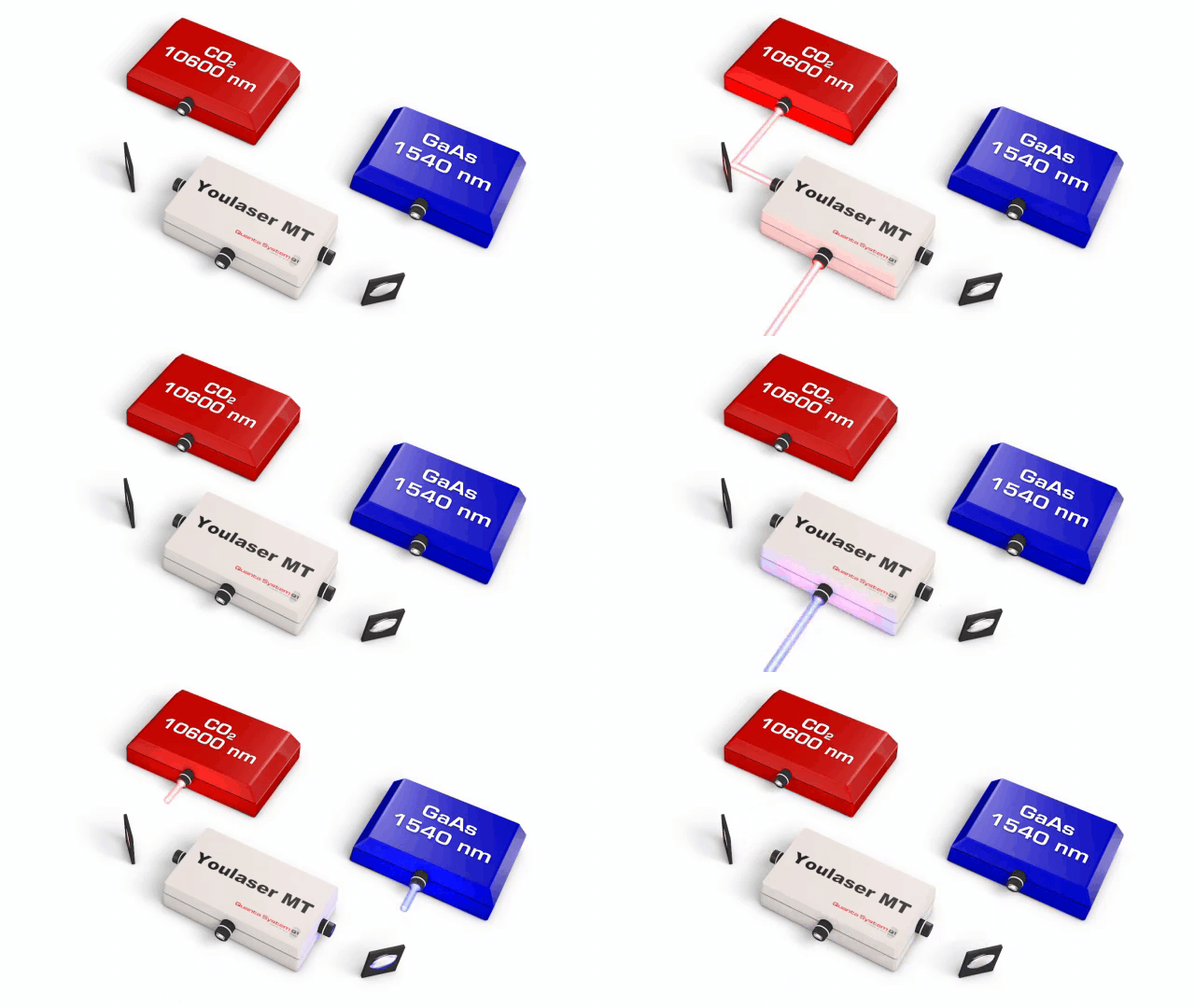
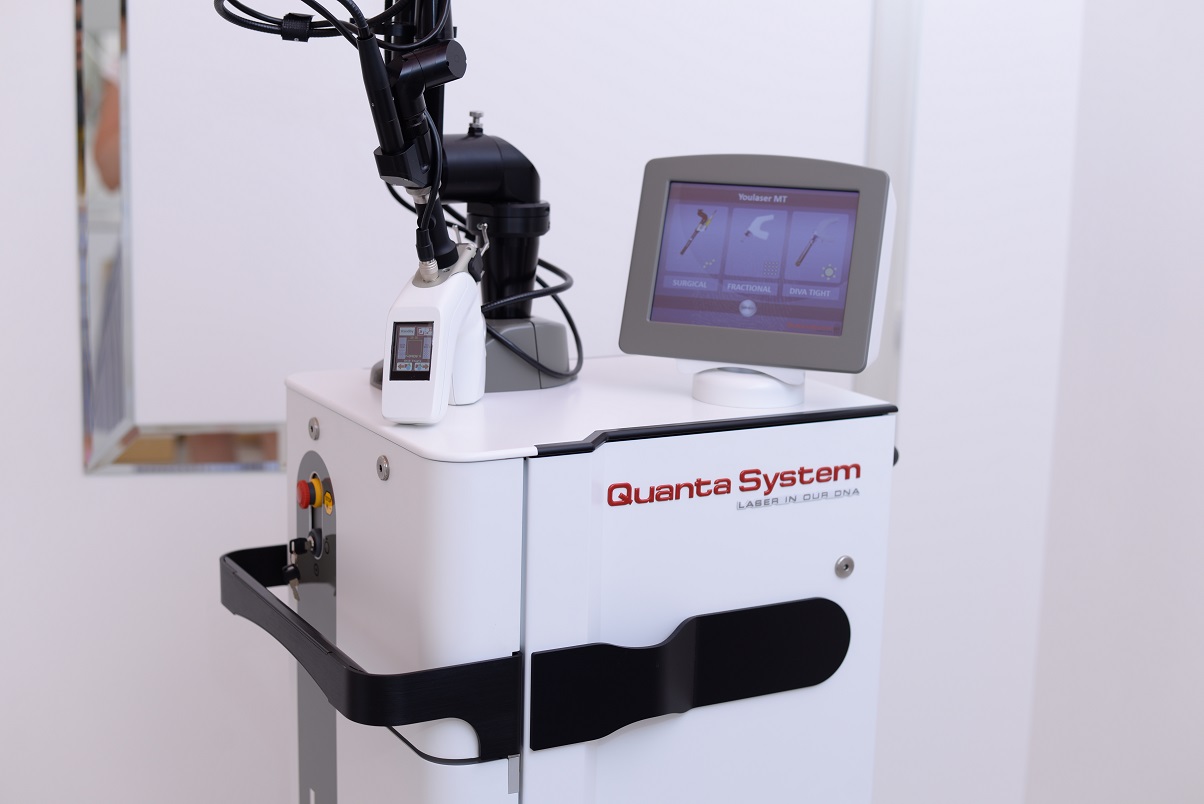 The Youlaser MT is the first and only laser that, thanks to its mixed technology, is able to combine wavelengths of 10600 nm and 1540 nm in a sequential or simultaneous mode by fractional emission. These two wavelengths emitted together maximise the benefits of each laser, improving results in a single session.
Aged skin with wrinkles and pigmentation, scarring and vaginal atrophy can be improved with the synergy of this laser, which offers advanced results with no downtime for the patient.
There are advantages and limitations to both ablative and non-ablative lasers. Ablative lasers have faster results, but may not be applicable to all patients due to their long downtime and risk of hyperpigmentation. Non-ablative lasers are much more tolerated, regardless of skin type, but need repeated sessions to achieve the desired goal.
The Youlaser MT is the first and only laser that goes beyond these limits by combining ablative CO2 and non-ablative GaAs. The laser can deliver wavelengths of 1540 nm and 10600 nm in the same microdot with sequential or simultaneous emission. This is important to achieve new and effective treatment standards.